What Changes When a Company Starts Measuring Its Emissions
Measuring greenhouse gas emissions is the decisive step that turns climate strategy from abstract intent into verified operational action.
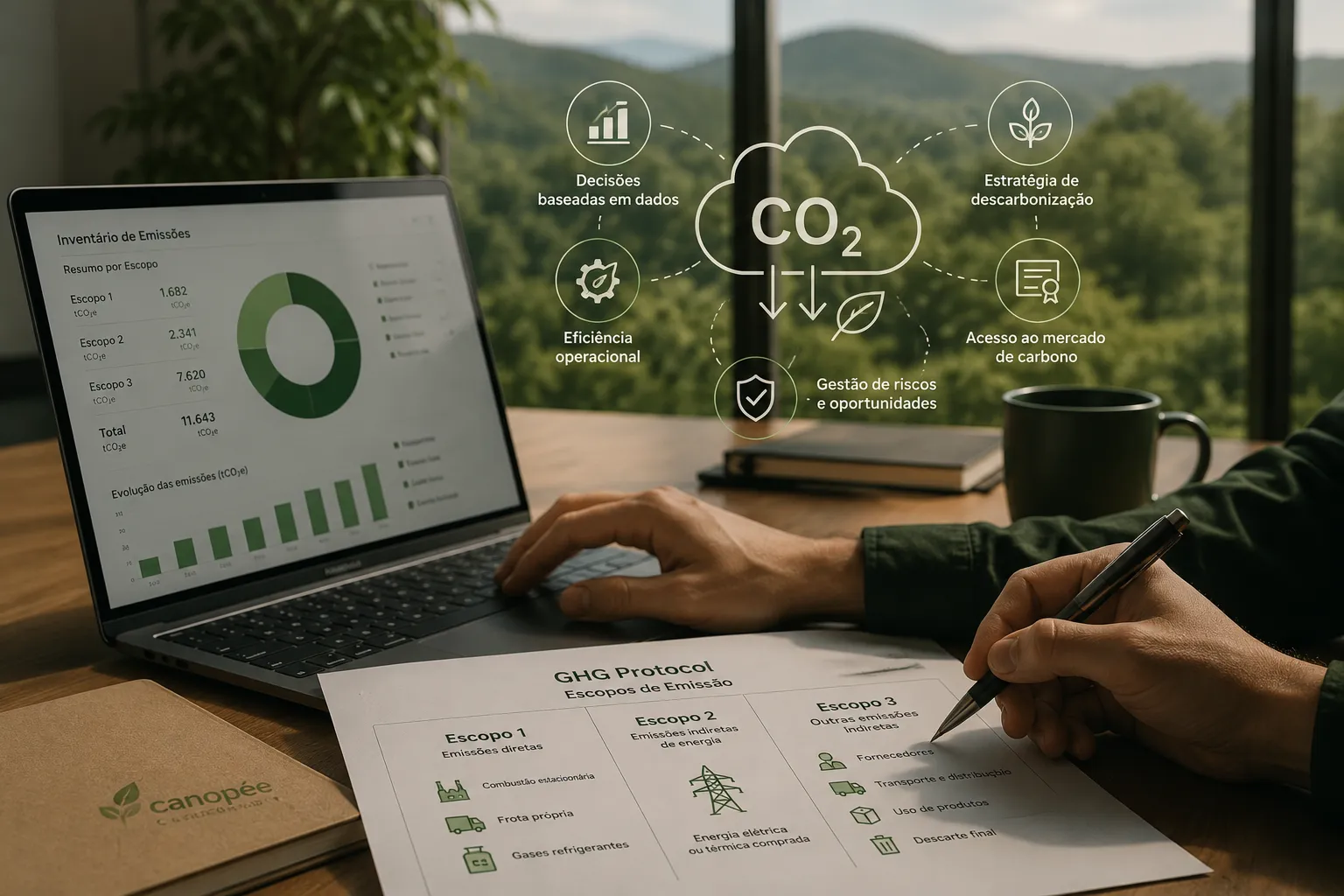
Beginning to measure greenhouse gas emissions is, for many organizations, the first tangible engagement with climate strategy. Before that step, sustainability often remains abstract or distant from day-to-day operations. However, the moment a company completes its first greenhouse gas inventory, the perspective shifts completely: emissions gain an exact address, operational ownership, and measurable magnitude.
The preeminent global accounting framework used to structure corporate inventories is the GHG Protocol, which categorizes emissions across three distinct scopes. Scope 1 encompasses direct emissions from owned facilities and vehicle fleets, such as fuel combustion and refrigerant leakage. Scope 2 accounts for indirect emissions associated with purchased electricity, steam, heating, and cooling. Scope 3 is the most comprehensive and complex: it covers the broader value chain, spanning upstream supplier logistics to downstream product end-of-life disposal. Each scope reveals a different tier of operational control and corporate responsibility.
With an auditable inventory in hand, leadership gains empirical data to drive strategic decisions. What was previously guesswork becomes quantitative analysis: which business units produce the highest emissions intensity, which logistics modalities inflate the carbon footprint, and which suppliers represent concentrated climate risk. This visibility creates natural internal momentum for energy efficiency, raw material substitution, and process optimization. Measurement is not merely a disclosure exercise; it is the essential launchpad for genuine operational decarbonization.
Furthermore, precise measurement opens the door to responsible engagement in the voluntary carbon market. Without an established inventory, an organization cannot accurately identify residual emissions—those stubborn emissions that remain after deploying all technically and economically viable internal reduction levers. These residual emissions represent the legitimate domain for purchasing high-integrity carbon credits. The hierarchy is unequivocal: reduce all possible operational emissions first, then compensate what cannot yet be eliminated.
For organizations taking their first steps, a greenhouse gas inventory represents far more than compliance documentation. It is the management tool that translates climate ambition into verifiable progress. It also provides the foundation for partnering with forest conservation initiatives like Canopée's REDD+ projects, which supply high-integrity carbon credits to offset residual emissions with verified environmental permanence.
For companies that have not yet conducted their first carbon audit, Canopée provides comprehensive, methodologically rigorous inventory services. Anchored in the GHG Protocol and market best practices, Canopée guides clients through every phase: from operational data collection to scope-by-scope consolidation, with clear, traceable deliverables. The same trusted partner helping measure emissions also provides certified carbon credits for residual offsetting, establishing a coherent climate roadmap from start to finish.