Offsetting vs. Reduction: How to Balance in Practice
Understand the fundamental difference between reducing operational emissions and purchasing offsets, and how to structure a credible corporate climate strategy.
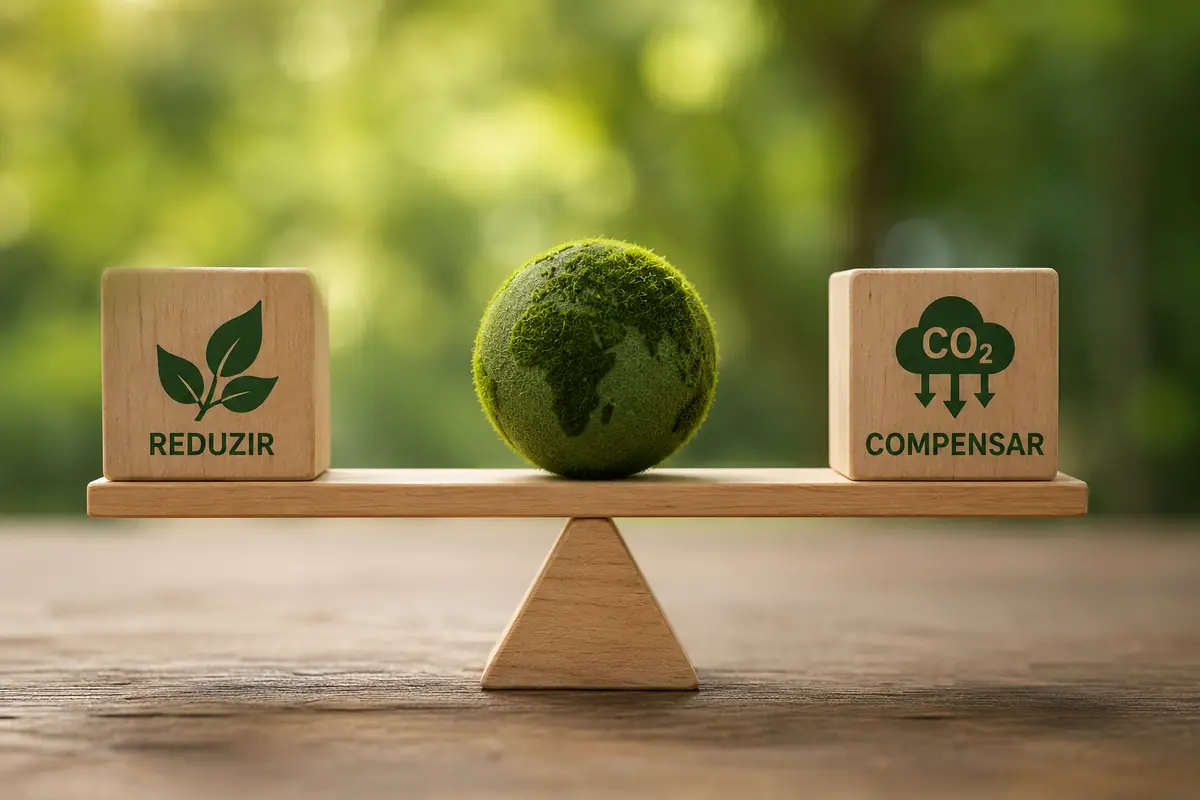
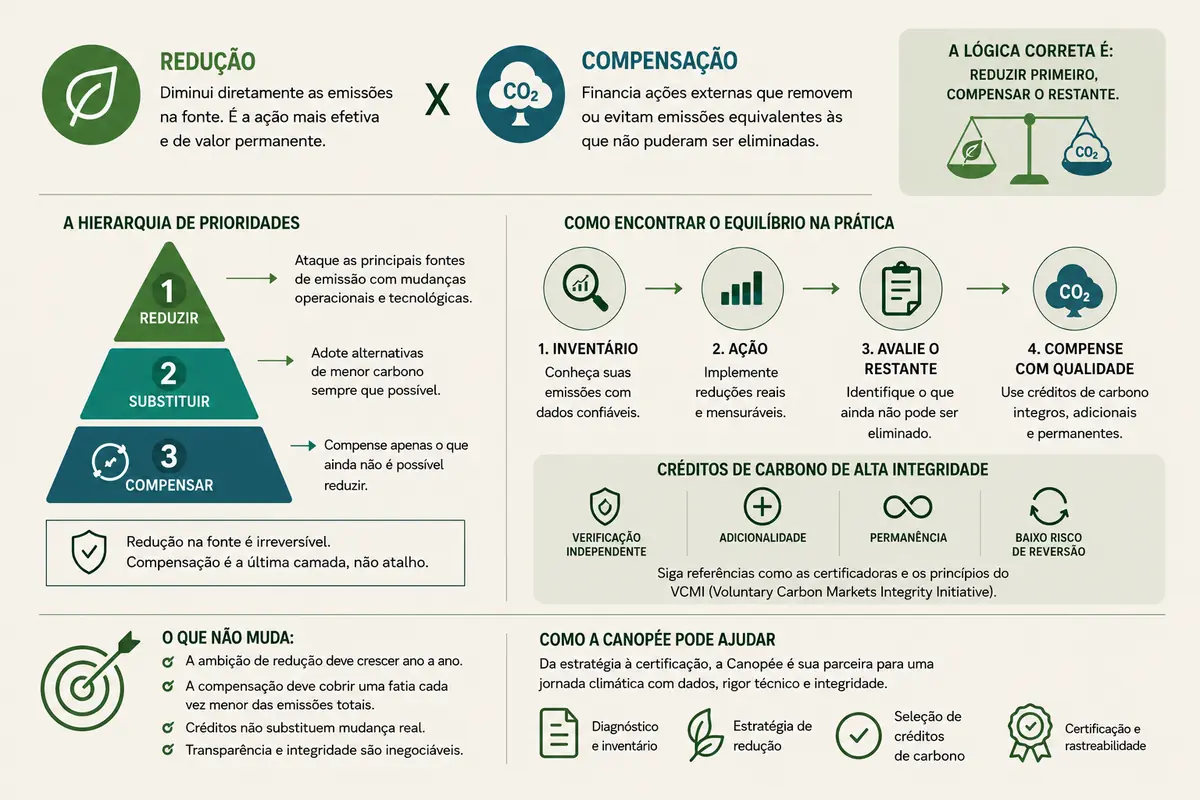
In climate discussions, two terms appear frequently and are often conflated: reduction and offsetting. Reduction means directly eliminating the volume of greenhouse gases emitted by a company's operations, products, or supply chain. Offsetting, conversely, involves financing external projects that remove or avoid an equivalent volume of emissions that could not be eliminated at source. Both mechanisms have a legitimate role within corporate climate strategy, but they are not interchangeable and occupy very different positions within the mitigation hierarchy.
The standard principle is straightforward: reduce first, offset the remainder. Every tonne of CO₂ avoided at source delivers permanent climate benefit, whereas external carbon credits depend on ongoing governance and monitoring conditions to maintain permanence over time. Natural forests face disturbance risks, project managers may change, and carbon accounting methodologies undergo periodic revisions. Direct reduction at source, properly executed, is irreversible. Therefore, offsetting must be understood as the final layer of a decarbonization strategy, never as a shortcut to bypass necessary operational transformations.
In practice, achieving balance begins with a rigorous greenhouse gas inventory. An organization that understands its emissions hotspots can target them directly through capital investments and operational shifts—such as fleet electrification, renewable power purchase agreements, or circular manufacturing design. What remains after deploying viable efficiency measures—emissions currently lacking technological or economic alternatives—forms the legitimate scope for compensation through carbon credits.
The integrity of the credits used to offset matters just as much as the volume. Low-integrity credits lacking independent verification or carrying reversal risks generate false claims of climate neutrality. Global frameworks such as the Voluntary Carbon Markets Integrity Initiative (VCMI) and established certification standards exist to ensure every offset tonne is genuine, additional, and permanent. Selecting high-integrity credits distinguishes credible climate leadership from superficial public relations.
The practical balance between reduction and offsetting is not static. It evolves as technologies mature and regulatory frameworks develop. What remains constant is the long-term trajectory: reduction targets must intensify year over year, while offsetting should address an increasingly narrow share of total residual footprint. Companies treating carbon credits as a permanent substitute for structural decarbonization face growing regulatory and reputational liabilities in a market demanding transparent evidence.
Canopée serves as a strategic partner throughout this roadmap, from initial footprint diagnostics to selecting and certifying the carbon credits best suited to each client's profile. Anchored in verifiable data and internationally recognized methodologies, Canopée helps companies understand where their most material emissions lie, which reductions are feasible in the short and medium term, and how to structure an offsetting strategy that withstands technical and regulatory scrutiny. Beyond supplying credits, Canopée offers integrity: every project connected to the platform is assessed against rigorous traceability and transparency criteria, the very principles underpinning our corporate identity. For those ready to move from rhetoric into action, this is the starting point.