How Service Companies Use ESG to Close More Contracts
How Scope 3 of the GHG Protocol and the SBCE cascade effect transform sustainability from a PR cost into a competitive sales edge.
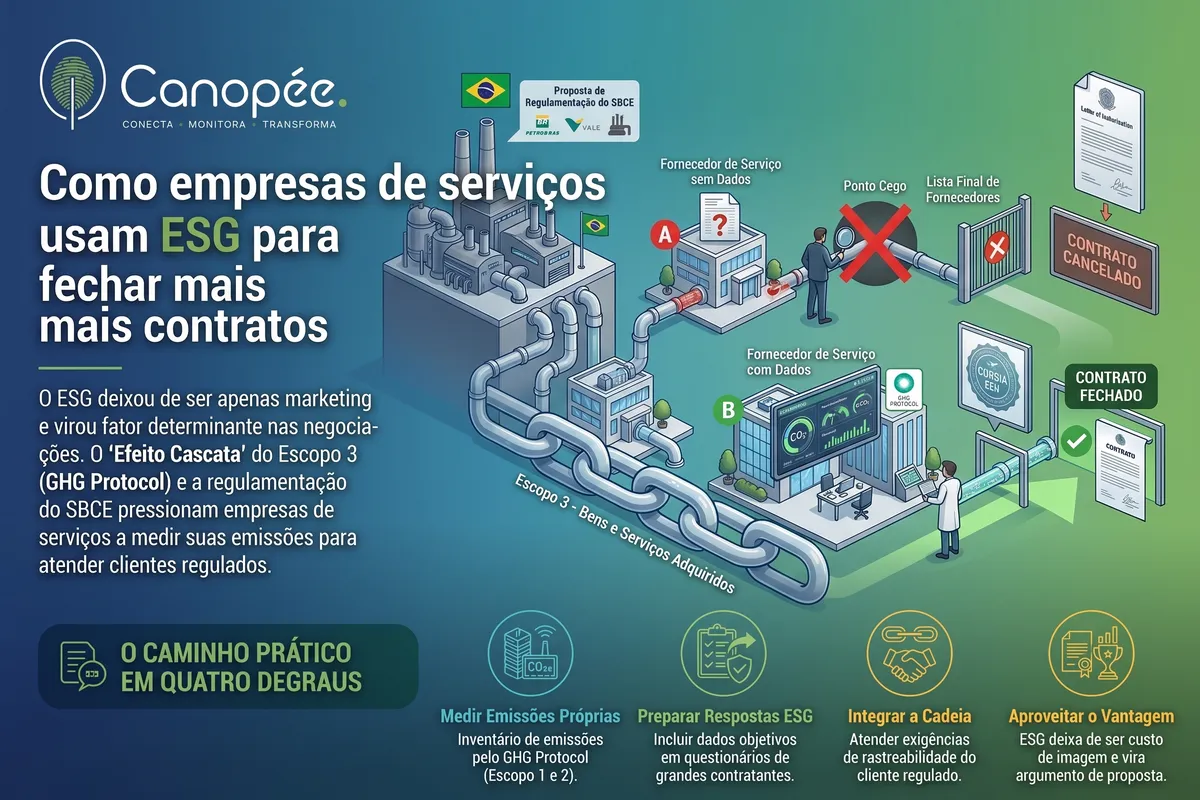
For years, sustainability was treated as a marketing matter within service companies. Law firms, consultancies, advertising agencies, software developers, and logistics providers highlighted ESG in annual corporate reports, but rarely at the negotiation table. That has changed. Today, procurement questionnaires from major corporate clients feature direct questions about emissions, and answers to those questions directly dictate who makes the final vendor shortlist.
The explanation is technical and stems from a GHG Protocol concept known as Scope 3, which accounts for a company's indirect value chain emissions. Within it lies a dedicated category for purchased goods and services. In practice, this means your emissions as a supplier become part of your client's carbon footprint. A corporation that committed to science-based reduction targets must also decarbonize what it purchases, and the most straightforward way to do so is selecting suppliers capable of measuring and reporting their own emissions. Vendors unable to provide verifiable data become blind spots in the client's inventory—and blind spots disrupt audits.
In Brazil, this commercial pressure will intensify through regulatory channels. The proposed monitoring, reporting, and verification regulation for the SBCE (Brazilian Emissions Trading System), created by Law 15,042/2024, sets out a proposed 2027 start for sectors including oil and gas, steelmaking, cement, pulp and paper, and commercial aviation. Service companies are not on the list of directly regulated entities, but they serve those who are. When a regulated corporate client needs an auditable, traceable emissions inventory, it demands verified data from its supply chain. The cascade effect across suppliers is the least discussed aspect of the regulation, yet commercially the most critical.
The practical roadmap typically follows four distinct steps, where sequence matters more than speed:
- 1. Diagnosis and Inventory: Measure direct and indirect operational emissions following the GHG Protocol methodology;
- 2. Governance and Traceability: Structure auditable records to promptly answer procurement questionnaires and client due diligence;
- 3. Efficiency and Decarbonization: Reduce operational emissions and optimize resource efficiency across service delivery;
- 4. Responsible Offsetting: Neutralize residual emissions using certified, traceable carbon credits.
The commercial return manifests quietly but measurably. In technically tied procurement bids, a supplier answering ESG assessments with primary verified data shortens the client's decision cycle and avoids disqualification due to missing information. That is the real business impact: ESG shifts from an image expense into a competitive proposal asset.
At Canopée, we deliver GHG Protocol emissions inventory services and develop certified REDD+ conservation projects in Acre, observing this momentum accelerating rapidly among companies serving sectors mapped by the SBCE.