Cercarbono Approved as CCP-Eligible: What This Means for Canopée
The certification standard behind Canopée's forest carbon projects was approved as CCP-Eligible by the ICVCM, confirming its governance and verification meet the Core Carbon Principles.
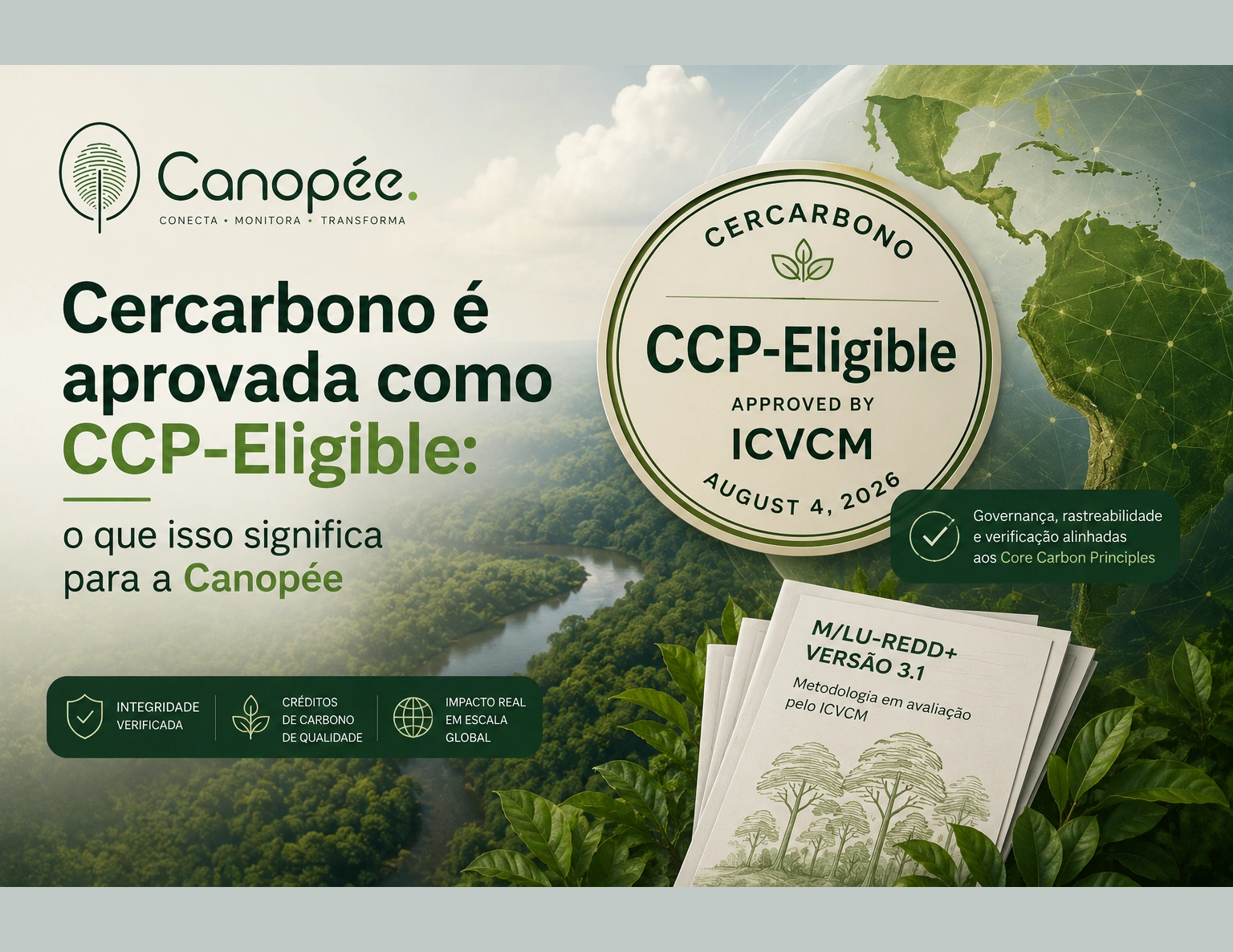
On August 4, 2026, Cercarbono, the international certifying standard behind Canopée's forest carbon projects, was officially approved as a CCP-Eligible crediting programme by the Integrity Council for the Voluntary Carbon Market (ICVCM). This landmark recognition confirms that Cercarbono's institutional governance, environmental registry traceability, and independent verification procedures fully comply with the Core Carbon Principles (CCPs)—the preeminent independent global benchmark for integrity in the voluntary carbon market.
This achievement establishes Cercarbono as the largest certification programme headquartered in Latin America to achieve CCP eligibility. With over 200 registered projects across 25 countries and approximately 130 million carbon credits issued—representing roughly 7% of the global voluntary market—Cercarbono units are already recognized in national compliance frameworks across Colombia, Mexico, Chile, Ecuador, and Peru, demonstrating an established bridge between voluntary action and regulated compliance.
The most consequential aspect of the announcement is that Cercarbono will submit five sectoral methodologies for the second phase of ICVCM evaluation, including M/LU-REDD+ Version 3.1—the exact methodology underpinning Canopée's Yuxibu 2 and Itxawá REDD+ conservation projects in Acre. Upon methodology approval, credits issued from these projects will be eligible to carry the CCP integrity label, an elite distinction increasingly demanded by corporate buyers and international institutional investors.
It is important to maintain clarity on regulatory milestones: CCP-Eligible represents the first of two stages within the ICVCM assessment framework. The standard has satisfied overarching programme-level governance, while project methodologies undergo separate evaluation against stringent criteria including additionality, permanence, robust quantification, and the avoidance of double counting, with no timeline set for completion. The CCP label on individual credits does not exist yet, but the pathway to full accreditation is clearly open.
For corporate sustainability leaders seeking independently verified carbon assets, this milestone signals mature institutional governance across Latin American environmental markets. Canopée actively champions this transition, developing Yuxibu 2 and Itxawá under the very methodology being evaluated, reaffirming our commitment to rigorous transparency, ecological permanence, and full traceability across every credit issued.